
OperBot answers from your work instructions and captures what they don't cover. An engineer approves every change.
Affiliations

 Realist Lab
The floor asks. An engineer approves.
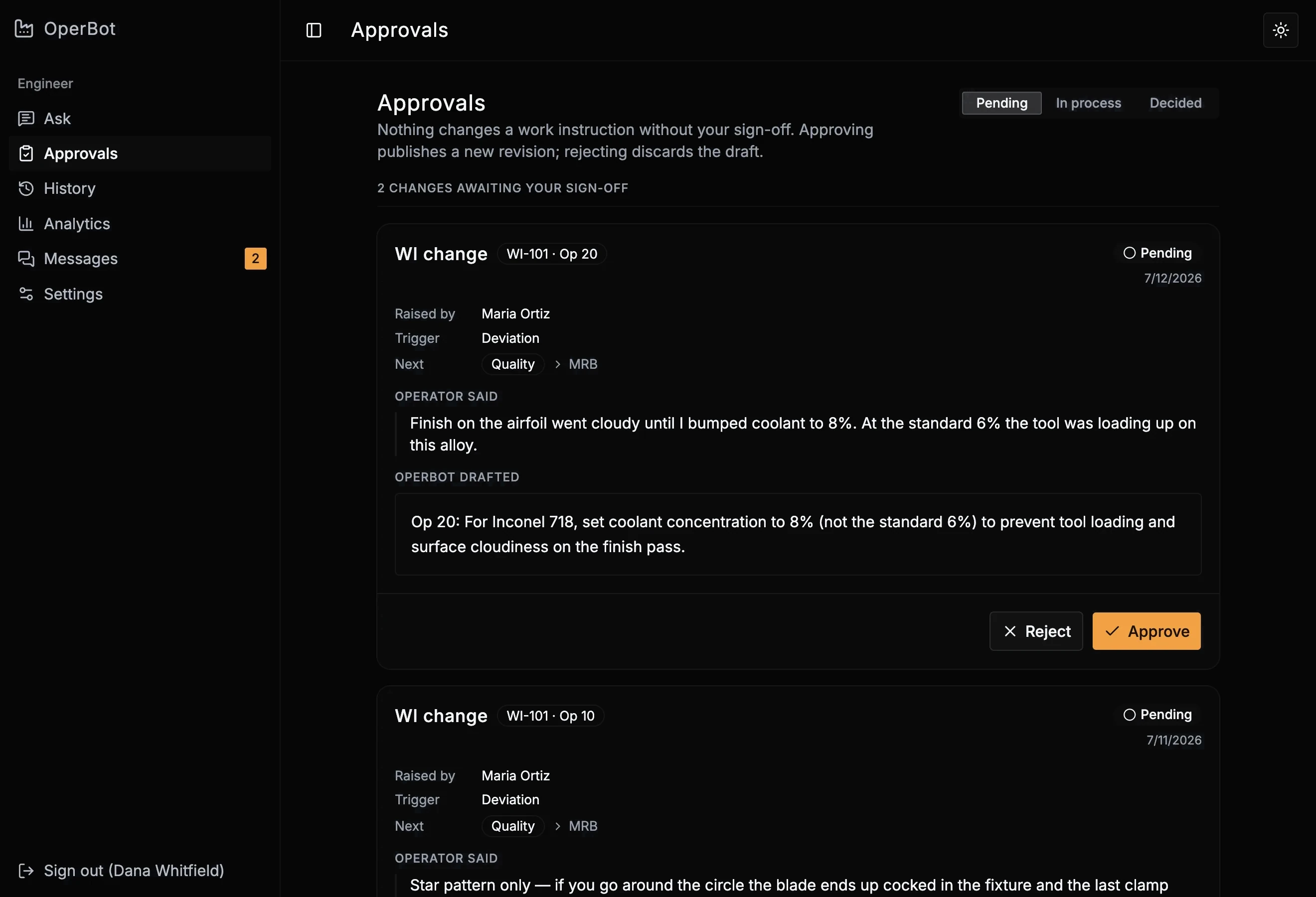
Every answer is grounded in your own work instructions, scoped to the part and revision on the machine, with the source cited. Nothing reaches the floor until an engineer says so. Real screens from the product, shown with demonstration data.

The stakes
Your best operators are retiring.
None of what makes them good is written down. It's in how they set up a job, and when they override the number on the page.
- 25%
- of the manufacturing workforce is over 55
- 2.1M
- manufacturing jobs projected to go unfilled by 2030
- $47M
- lost a year at a large firm to knowledge that never got shared
Sources: The Manufacturing Institute · Deloitte & The Manufacturing Institute · Panopto Workplace Knowledge Report
How it works
We don't document your operators. We apprentice to every one of them.
It learns from your whole floor, earns trust by being useful, then captures the judgment that would otherwise leave.
Serves the floor
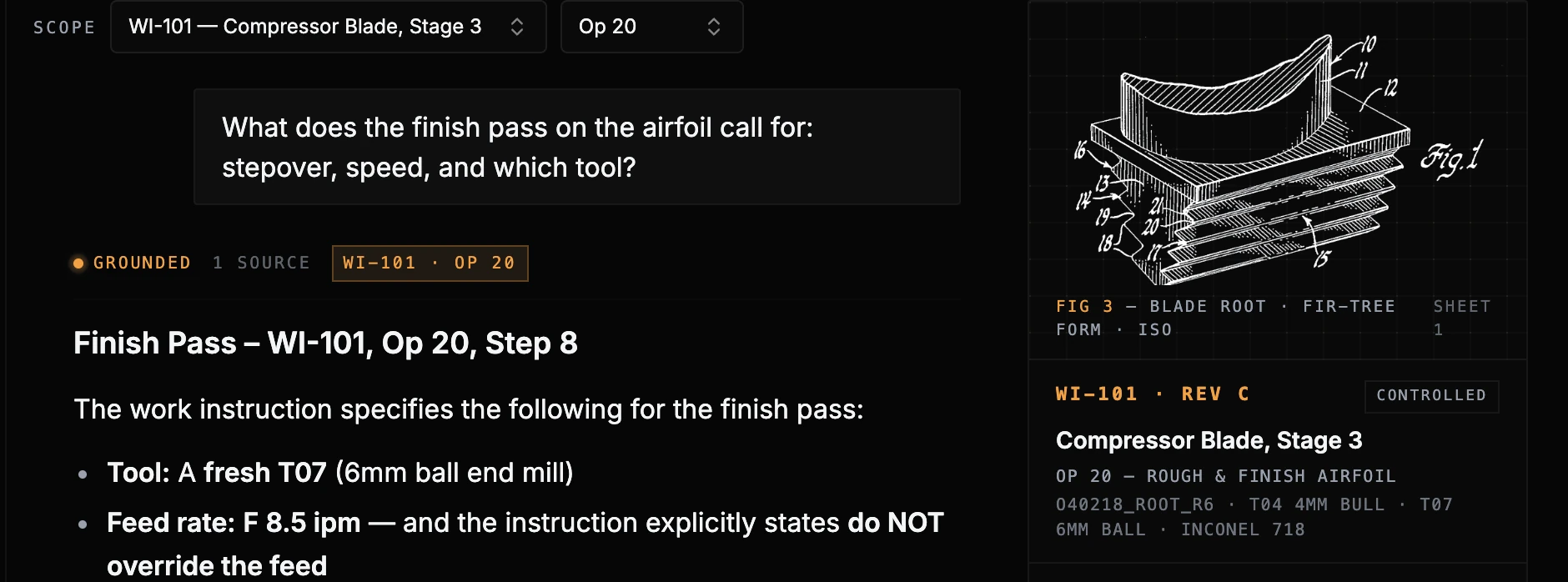
Answers spec questions, pulls drawings and past orders, and surfaces how the job ran last time, at every station, on every shift.
Earns the question
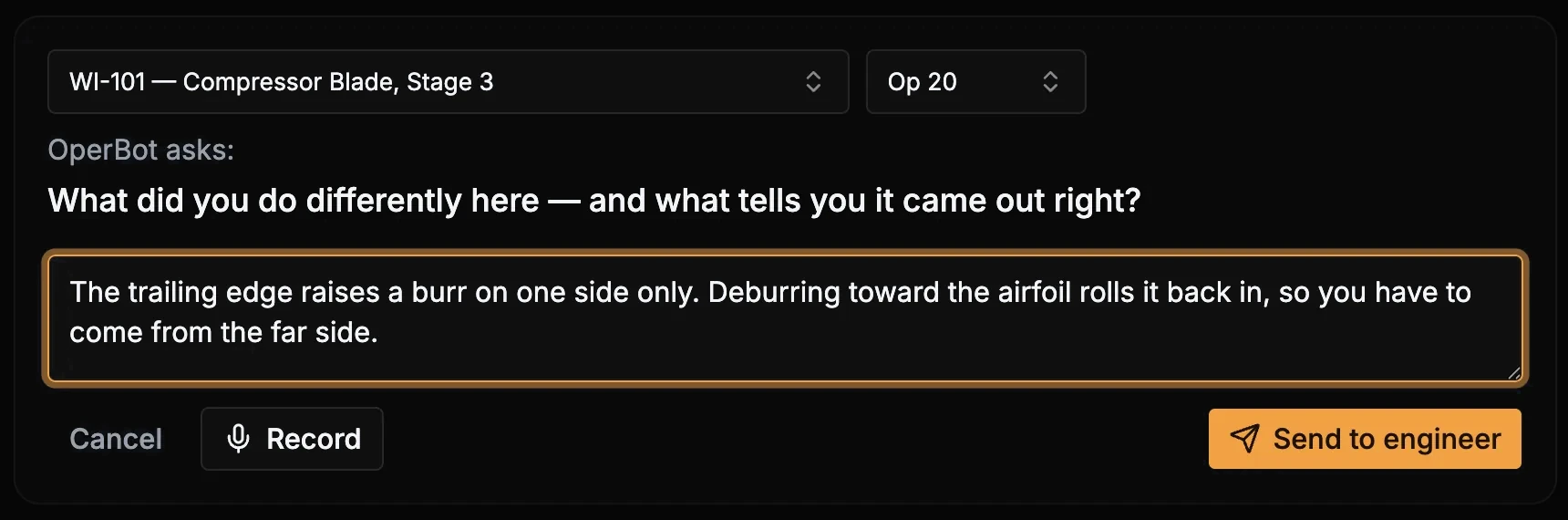
Being useful buys the right to ask, the moment something deviates. Otherwise it stays quiet.
Captures the judgment
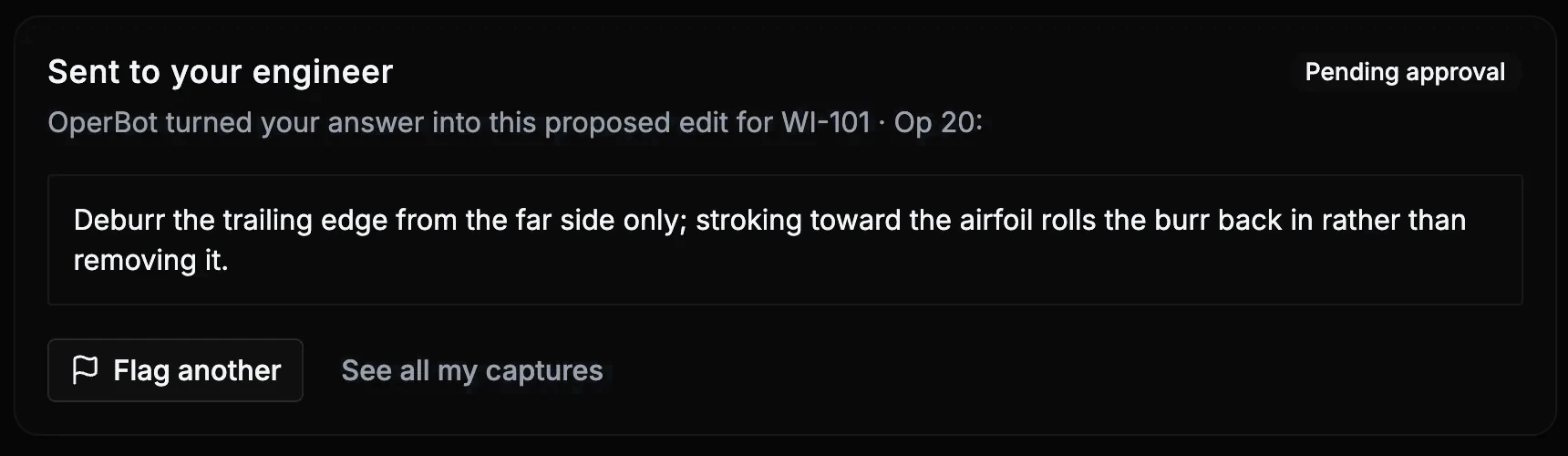
The operator answers in ten seconds by voice. The answer becomes a proposed change, never an automatic one, and an engineer approves it.
Talk to the founders.
Tell us what you make and how many operators are on the floor.